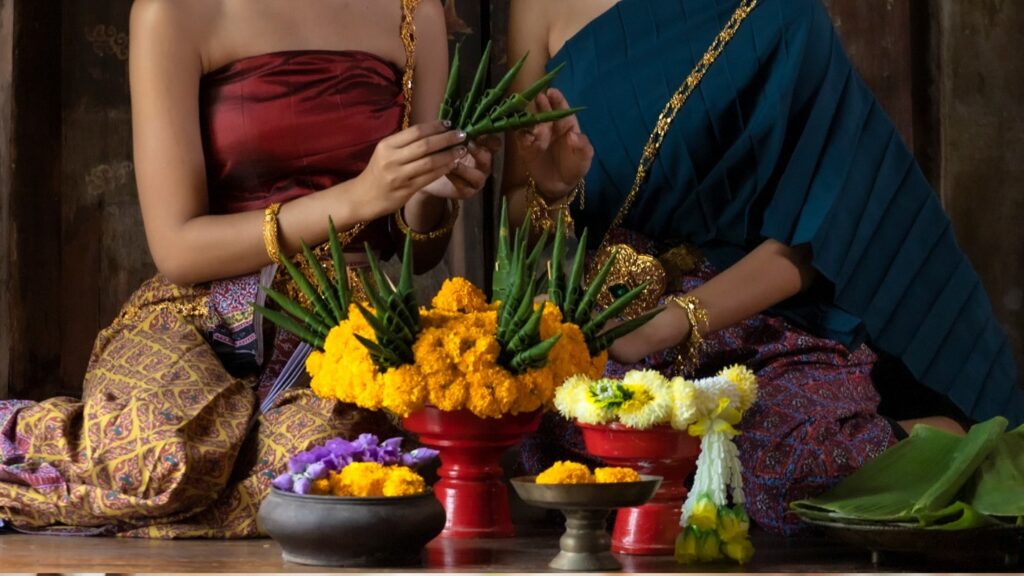
In Thai society, merit-making festivals are not merely rituals; they are delicate weavings of faith, memory, and seasonal emotion. The faint scent of incense, the echo of temple bells at dawn, and the careful arrangement of flowers all compose a sensory tapestry of Thai cultural grace.
During Songkran, water became a symbol of purification and renewal. People dress in soft hues and gentle smiles. The ideal fragrance is light and airy, like the first drop of water on the skin. Notes of citrus, jasmine, or green tea evoke clarity and new beginnings.
During Khao Phansa, tranquility takes center stage. People turn inward, embracing simplicity and reflection. Fragrances should be soft and intimate, for example: lotus, sandalwood, or traditional powder which is quietly comforting without seeking attention.
On the night of Loy Krathong, candlelit floats drift across the water, symbolizing release and quiet beauty. Fragrances here may carry a gentle romance, for example: ylang-ylang, rose, or soft musk that like flickering light mirrored in the soul.
On sacred days such as Visakha Bucha Day and Magha Bucha Day, simplicity becomes the highest form of beauty. Candlelit processions under the moon invite inner stillness. The ideal scent is almost a “second skin” which is clean, soft, and barely there, like white jasmine or gentle soap.
Ultimately, fragrance in merit-making is not about standing out, but about belonging. It is a gesture of respect for place, for people, and for the moment itself. The most beautiful scent is not